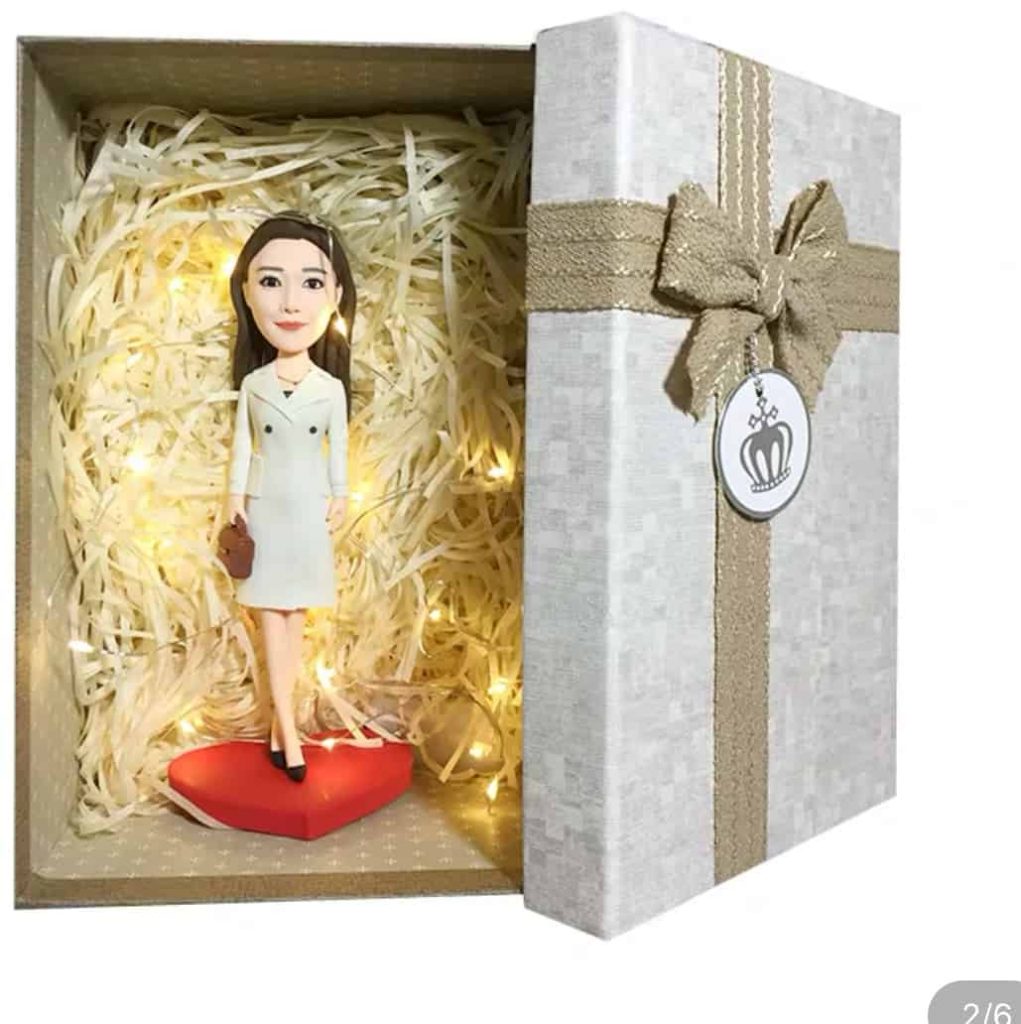
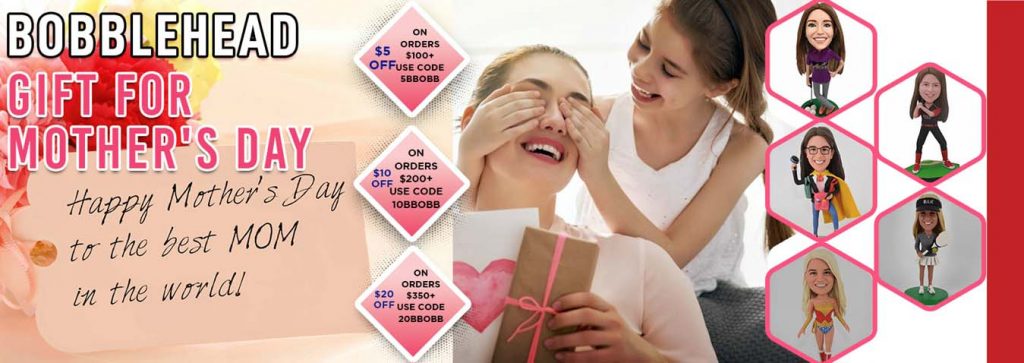
The bobble head has transcended its status as a mere novelty item to become a global cultural phenomenon. Known by various names such as nodders, wobblers, or bobbleheads, these collectibles are instantly recognizable by their oversized heads connected to the body by a spring or hinge. When touched lightly, the head oscillates or “bobbles,” creating a whimsical motion that has captured the hearts of sports fans, corporate leaders, and gift-givers for decades. But where did this iconic figurine come from, and how has it evolved into the highly personalized bobble head we see today?
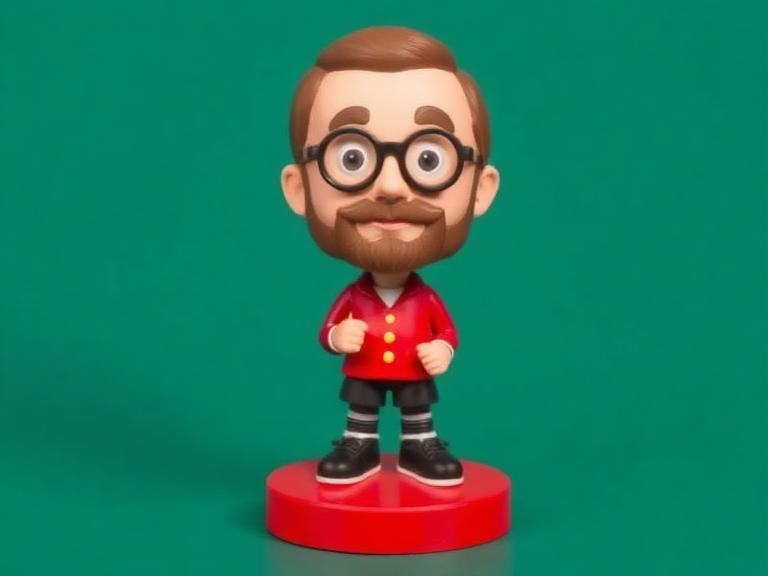
In this ultimate guide, we explore the intricate history of the bobble head, the scientific advancements in materials used for their construction, and why they remain one of the most popular gift choices in 2026. From the ancient roots of nodding figurines to the modern era of high-fidelity customization, we cover everything you need to know about these wobbling wonders.
- Defining the Bobble Head: Anatomy and Appeal
- The Deep Roots: Ancient Origins and Early European Influence
- Modern Resurgence: The 1960s Golden Era
- Common Materials: From Ceramic to Polyresin and Plastic
- Personalized Revolution: Bbobbler Custom Bobble Head Dolls
- The Art of Collecting: Valuation and Care
- Summary Comparison: Bobble Head Materials
- Frequently Asked Questions
- References and Citations
Defining the Bobble Head: Anatomy and Appeal
At its core, a bobble head is a type of collectible figurine whose head is often oversized compared to its body. Instead of a solid connection, the head is attached using a spring or a hook-and-bolt mechanism. This allows the head to move independently of the body when subjected to vibrations or a gentle tap. The psychological appeal of the bobble head lies in its caricature-like proportions and its interactive nature, which brings a sense of life to an otherwise static desk ornament.
In the professional world, a bobble head often serves as a promotional tool for sports teams, celebrities, and major brands. However, in the private sector, they have become the gold standard for personalized gifts, representing everything from a groomsman at a wedding to a beloved family pet.
The Deep Roots: Ancient Origins and Early European Influence
While we often associate the bobble head with 20th-century baseball, its true origins date back centuries. Some historians point to 17th-century Asia, specifically China and Japan, where nodding figurines made of string and paper were popular. However, the first written literary reference to a bobble head appears in Nikolai Gogol’s 1842 short story, “The Overcoat,” where a character’s neck is described as being like “the necks of plaster cats which wag their heads.”
The European Connection
By the 18th century, “temple nodders” from Canton were being imported into England and continental Europe. These were typically made of plaster or clay and depicted various religious or cultural figures. During the late 1800s, Germany became a manufacturing hub for porcelain nodding dolls, often referred to as “nodders.” These early versions used a simple hook mechanism rather than the springs we see in a modern bobble head.
Modern Resurgence: The 1960s Golden Era
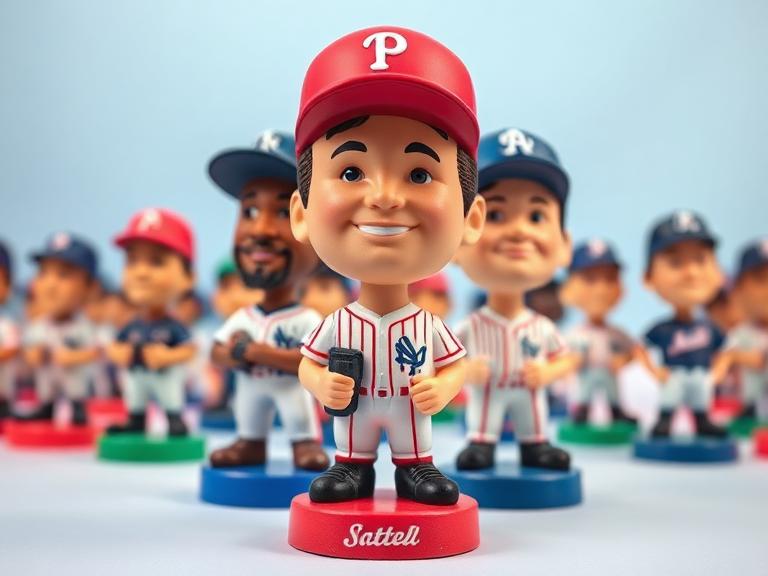
The bobble head entered the American mainstream in the 1960s. Major League Baseball (MLB) began producing a series of paper-mache figurines for each team, all featuring the same generic face but wearing different team uniforms. This era saw the production of the “Big Four” collectibles: Mickey Mantle, Willie Mays, Roger Maris, and Roberto Clemente. These early 1960s models are now among the most sought-after items in the bobble head collecting world.
By the 1970s, interest waned as manufacturers shifted to plastic, which lacked the charm of ceramic or paper-mache. However, the industry saw a massive revival in the late 1990s when the San Francisco Giants gave away 35,000 Willie Mays bobbleheads to celebrate the 40th anniversary of Candlestick Park. This event reignited the global passion for the bobble head, leading to the diverse market we enjoy today.
Bbobbler: Excellence in Custom Bobble Head Artistry

Since 2012, Bbobbler.com has been custom sculpting personalized bobblehead based on photos for thousands of happy customers that perfectly sums up their unique love. If you are looking for a realistic, modern, and cute custom made bobble head with best likeness, low price and fast turnaround time, you have come to the right place. If you are looking for funny and cool bobblehead style figurines, we have those too!
A custom bobble head is a brilliant gift idea for those special dates like birthday, anniversary, Valentine’s Day, Boss’s day, retirement, friend’s wedding, New Year, Christmas, etc. This high quality handmade bobblehead dolls with amazing likeness provide happiness to people who receive it—bride, groom, bridesmaid and groomsmen on wedding, nurse, dentist and your doctors, sports fans, players and coach, colleague and boss in business, members in family, everyone love to get a doll looks like him/her. Making a bobble head for your dog/cat or yourself is also a cool idea.
Explore our range of specialized products:
- Bulk Custom Bobble Head Dolls for corporate events
- Fully Custom Bobble Head Dolls with 100% unique designs
- Wedding Custom Bobble Head Dolls for cake toppers
- Sports Custom Bobble Head Dolls for athletes and fans
- Family and Work Custom Bobble Head Dolls
- Casual and Christmas Custom Bobble Head Dolls
With hundreds of styles of bobblehead custom models to choose from, you are sure to find a style that will work for you. If you don’t find a model you like, Bbobbler offers 100% fully customized bobble head designs as unique for you!
Common Materials: From Ceramic to Polyresin and Plastic
The material of a bobble head determines its weight, durability, and the level of detail that can be achieved. As technology has advanced, manufacturers have moved away from fragile clay toward more resilient compounds.
1. Polyresin (The Professional Standard)
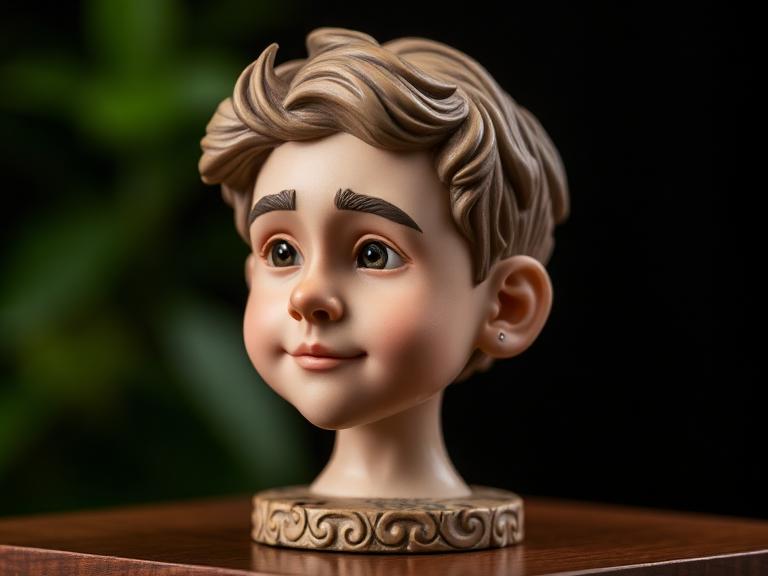
Most high-quality custom bobble head dolls today are made from polyresin. This material is a petroleum-based resin mixed with stone powder. It is preferred for its “stone-like” feel and its ability to hold intricate details. When Bbobbler sculpts a personalized figurine, polyresin allows for the fine lines required to achieve a realistic likeness. It is also highly durable and resistant to fading.
2. Plastic (PVC)
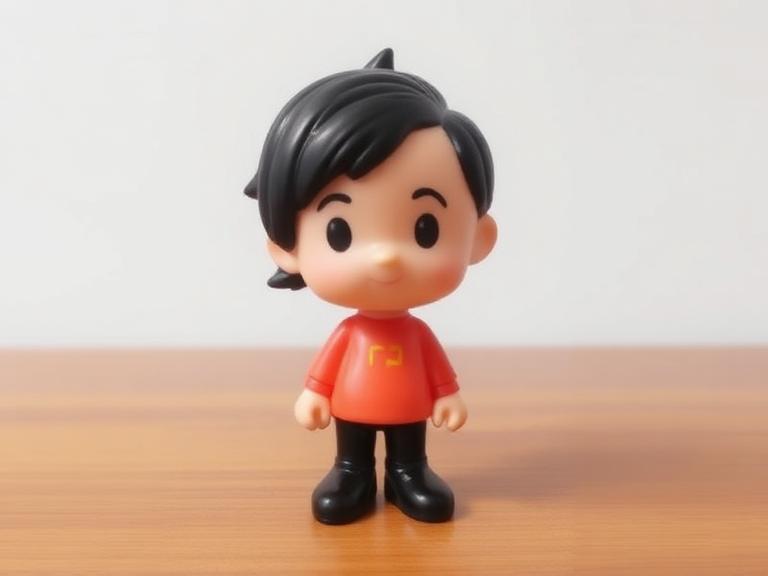
Plastic is typically used for mass-produced bobble head items found in stadium giveaways. While lightweight and cheap to produce, plastic lacks the premium feel of polyresin. Detail is often sacrificed for speed of manufacture, and the paint on plastic models tends to peel or chip more easily over time.
3. Ceramic and Porcelain
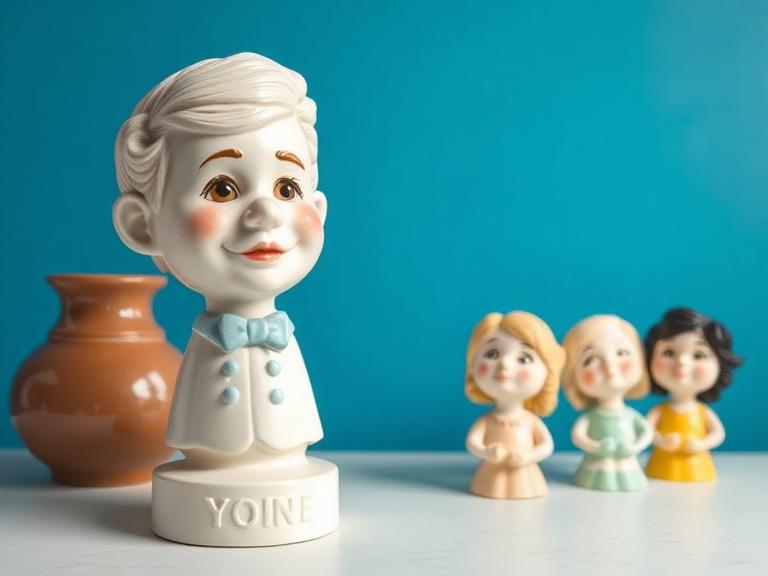
These were the materials of choice for vintage nodders. They offer a beautiful, classic finish but are extremely fragile. A ceramic bobble head can shatter easily if dropped, making them less ideal for modern shipping and daily desk use.
Personalized Revolution: Why Custom Bobbleheads Matter
The true power of the bobble head in 2026 lies in customization. No longer restricted to famous athletes, anyone can now see themselves as a wobbling figurine. The process involves skilled artisans sculpting the face from high-resolution photos, ensuring that every detail—from the shape of the nose to the color of the eyes—is captured perfectly.
This level of personalization makes the bobble head a top-tier gift for emotional milestones. A wedding bobble head serves as a lasting memento of a couple’s big day, while a retirement bobble head celebrates a lifetime of professional achievement. The ability to choose specific clothing, poses, and props (like a laptop for an office worker or a tennis racket for an athlete) adds a layer of thoughtfulness that standard gifts cannot match.
The Art of Collecting: Valuation and Care
If you are a serious collector of the bobble head, maintenance is key. To preserve the value and appearance of your figurines, follow these tips:
- Dusting: Use a soft-bristled makeup brush or compressed air to remove dust without scratching the paint.
- Sunlight: Keep your bobble head collection out of direct sunlight to prevent UV rays from fading the vibrant colors.
- Spring Care: Do not over-bobble the head. Continuous aggressive motion can fatigue the spring over several years.
- Environment: Keep them in a temperature-controlled environment; extreme heat can soften certain resins or plastics.
Summary Comparison: Bobble Head Materials
| Material | Durability | Detail Level | Price Point | Common Use |
|---|---|---|---|---|
| Polyresin | High | Excellent | Mid-High | Premium Custom Gifts |
| PVC Plastic | Medium | Low-Mid | Low | Stadium Giveaways |
| Ceramic | Low | High | Variable | Vintage Collectibles |
| Paper Mache | Very Low | Medium | N/A (Historical) | 1960s Classics |
Frequently Asked Questions
Typically, a high-quality handmade bobble head from Bbobbler takes about 2-4 weeks. This includes the sculpting phase, the baking/setting phase, painting, and drying. Fast turnaround options are often available for those with tight deadlines.
Yes, the bobble head market is stronger than ever. Their move into 100% full customization has made them a staple in the gift industry, particularly for weddings, corporate retirements, and personalized holiday presents.
There is no technical difference; “nodder” is simply an older term primarily used in the 19th and early 20th centuries. Today, the term bobble head is the industry standard.
Absolutely! Bbobbler specializes in custom pet bobbleheads. Whether it is a dog, cat, or even a parrot, artisans can create a miniature, wobbling version of your animal companion based on your photos.
References and Citations
- National Bobblehead Hall of Fame and Museum. “The Complete History of Bobbleheads.“
- MLB Archives. “The 1960s: The Era of the Baseball Nodder.“
- Wikipedia. “Bobblehead – Etymology and Cultural Impact.“
The bobble head remains a unique intersection of art, history, and personal expression. Whether you are hunting for a rare vintage ceramic nodder or looking to commission a 100% fully customized bobble head for a loved one’s birthday, these figurines offer a level of joy and character that few other objects can provide. By understanding their origins and the materials that make them, you can better appreciate the craftsmanship that goes into every single wobble.